Introduction
I'm something of a gaming geezer. At the time of this writing I don't own a Playstation 3, Xbox 360, or even Nintendo Wii. Heck, by the time you're reading this I might be busy not-owning the Playstation 4, Xbox 720, or WiiII. Although not an active participant in this generation of gaming there's still something about it I admire: all the competing consoles offer backwards compatibility with their previous incarnation. This is the first time in the nearly 40-year history of console gaming it's happened. Hardware manufacturers tried it for various reasons in the past, but not until 2006 was it a standard on all consoles.
This would have seemed impossible ten years ago. The idea that a new game system would support old games was by far the exception instead of the rule. How did backwards compatibility suddenly become an expectation for gamers and why are vendors now obliging? Let's take a walk through the history of backwards compatibility to see how we got where we are today.
OK, so what qualifies as "backwards compatibility"? For this article it refers to a new game system being able to natively play the games from the manufacturers previous system. Whether it's accomplished through hardware or emulation doesn't matter. If a cartridge adaptor is required that's fine. The key is being able to put the actual cartridge or CD in the newer system and play it. Yeah, you can play Genesis games on a Dreamcast with an emulator but you can't exactly stick a Genesis cartridge in and play it. On a similar note, third party (sometime pirate) adaptors to play one system on another don't qualify either. And last but not least, dual or combined systems like the TurboDuo or X'eye aren't included because they weren't new consoles; same deal for computers like the Coleco ADAM that happen to play cartridge games. I think everyone understands what I mean by "backwards compatibility" but I'll still get some email like "well your whole article is totally invalid because you didn't include Amstrad Mega PC which could play Genesis games." This is strictly looking at backwards compatibility from one system generation to the next, not a broad examination of systems that can play other systems.
Note: I see the terms "backward" and "backwards" used about equally when referring to this subject. I be no english scholar so I can't say which is correct. I only went with the 's' version because it just sounds right.
History
In the early 1980s Atari had a choke hold on the infant console gaming market. Coleco and Mattel produced technically superior competitors but the Atari 2600 managed to dominate them both. Brand recognition played a major role, "Atari" was synonymous with home gaming. Despite their apparent strength, Atari recognized that the 2600 was getting stale. There was only so much the system could do and it wouldn't be long before someone knocked them off. The Atari 5200 was their attempt to get ahead of the curve. Due to a redesigned cartridge slot, it could not play play 2600 games though. Gamers were not warm to this, they didn't like the idea that their 2600 games were now unusable. Those that didn't own a 2600 were reluctant to buy this newer system with few games available. This was the first time a major gaming company tried something like this, there was no precedent or experience to leverage. It wasn't long before Atari conceded to customer demand and released an adaptor to play 2600 games on the 5200.
The poor Atari 5200 never stood a chance though. It was as much a victim of the 1983 video game crash as it was a cause. This was also the first time a game company had to figure out how to balance pimping their new system with supporting the previous one. There must have been a tug-of-war going on at Atari. One group pulling to expand the "next-gen" system with another pulling for the resident cash cow. The result was that neither were well supported and both crashed, hard. This may go a long way towards explaining why future console manufacturers were quick to move all resources to their latest, greatest system.
The video game market bottomed-out in 1984. Against the odds Nintendo resuscitated things in 1985 with the NES. Like "Atari" a few years ago, "Nintendo" became synonymous with home gaming. Atari wanted that title back and hoped the Atari 7800 would be their savior.
Unlike the 5200, this new incarnation could play Atari 2600 games without an adaptor. I guess that was nice and all but it did virtually nothing to sell the system. The 2600 had been dead for two years, an eternity for a game system. The 7800 looked crude compared to the NES but Atari thought their past reputation would carry it. The 7800 never managed any impact on the gaming market, I found mine sitting on top of a dumpster if that's any indication.
The 7800 wasn't the only console to be crushed by Nintendo in the mid to late 80s. Sega's Master System was the second runner-up to the NES. Despite some outstanding titles, like Phantasy Star, it didn't make a dent in Nintendo's market share.
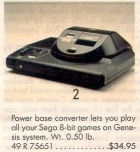
Sega knew their only way to win was to produce a system that absolutely blew away the NES. The 16-bit Sega Genesis was their successor to the ill-fated Master System. It was launched with an accessory called the Power Base Converter that allowed it to play the entire library of Master System games, even the obscure chip games. The Sega Genesis used the CPU from the Master System, the Z80, as a sound processor so a simple cartridge adapter did the trick. It was a good strategy for Sega, very few people owned a Master System but were aware that a few great games existed for it. The Power Base Converter gave them a some new games to try while the Genesis library ramped up. Once the Master System was dead and buried, in the United States at least, support for this attachment was dropped.
Nintendo wasn't going to be left behind and released the 16-bit Super Nintendo two years after the Genesis. It was a long two years, the Genesis had gathered a ton of momentum and many wondered if Nintendo could catch-up. Nintendo almost certainly considered whether to make the Super Nintendo backwards compatible. By this time the NES established a game catalog larger than anyone else ever had, could they really leave it all behind? The Super Nintendo CPU itself was backwards compatible the original NES CPU but the video chips were not. This is something that the hardware wizards at Nintendo could have worked out but they decided against it.
If hardware compatibility wasn't an obstacle then what was Nintendo's motivation? Their concern was likely that if the NES was alive then publishers would still release games for it rather than shift to the Super Nintendo. Famicom versions of Final Fantasy II and III were sitting in Japan just jonesing to be translated. Had the Super Nintendo been backwards compatible it's possible, perhaps likely, we would have seen these two games in the states. The Super Nintendo could have been in the unenviable position of having to compete not only against the Genesis but against it's little brother as well.
Nintendo's attitude with handhelds was different though. When the Game Boy Color was introduced it was backwards compatible. The systems were not drastically different so the newer model had no problem playing the old games. The Game Boy Advance and Game Boy Advance SP included a Z80 processor to support the Game Boy and Game Boy color games. To decrease size, backwards compatibility was dropped from the less-than-successful Game Boy Micro. The smash-hit Nintendo DS is backwards compatible with the Game Boy Advance (except for the link cable). As a side note, Nintendo also produced add-ons for the Super Nintendo and Gamecube to play Game Boy and Game Boy Advance games respectively.
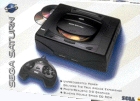
The next wave of systems represented a setback for backwards compatibility. When early pictures of the Saturn surfaced, rumors abounded that it was backwards compatible with the Genesis because of the cartridge slot. I personally recall hearing (uninformed) grumblings that the Saturn was a Genesis/Sega CD/32X combination or at least backwards compatible with them.
The Sony Playstation and Nintendo 64 weren't backwards compatible either. The Playstation one goes without saying I guess. Nintendo already established with the Super Nintendo that they weren't interested in consoles being backwards compatible. I'm sure some saw the d-pad on the controller and experienced a fleeting hope that Nintendo made some kind of dream system that played it all. Keep the faith, I'm sure some pirate system that does is in the works.
What if the Saturn was backwards compatible with the Genesis/Sega CD/32X? In my estimate, it would not have changed the Saturn's fate one bit. Less than a year into their releases, it was clear the Playstation had bested the Saturn. Sega had severely damaged their reputation beyond repair in the previous year. Gamers who dropped hundreds of dollars on Sega CD and 32X attachments felt burned by the release of the Saturn. They thought they had already purchased the "next-gen" hardware from Sega only to find that they were short-term gimmicks to try and slow down a Super Nintendo surge. Being able to play the games on the "real next-gen" system would have been no consolation for the expensive paperweights bought only months ago.
The next major system release was the Sega Dreamcast which was not backwards compatible with any previous systems. Like the Sega Genesis, backwards compatibility with the Saturn might have actually helped the system. The Saturn was a pretty distant second to the Playstation but had a few high profile games, like NiGHTS Into Dreams or Panzer Dragoon, that would have offered some nice padding to the launch library. Sega opted to try a fresh start and pass on any sort of backwards compatibility.
The Playstation 2 hit shelves a year later featuring backwards compatibility with the original Playstation. This new incarnation basically included a full working version of the original hardware which made it a practically trivial task. Sony must have faced the same debate Nintendo did during their Super Nintendo development. The Playstation was hugely popular and available pretty cheap. The Dreamcast was off to a slow start so maybe there was some fear that gamers were satisfied with Playstation and not interested in dropping a stack of cash for something glitzier. Whatever concerns existed about keeping the Playstation alive were ignored and the Playstation 2 went on to become the most successful game console to date.
The Xbox and Gamecube were the last entries to this gaming generation, neither were backwards compatible for obvious reasons. The Xbox had nothing to be backwards compatible with while the Gamecube was Nintendo's first departure from the cartridge format.
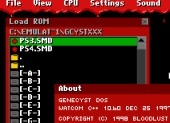
While all these systems battled something was brewing in the background. In the mid-90s computers were getting powerful enough to emulate classic consoles and arcade games. Yeah, it seems like an old 33mHz Intel 386 should have been able to emulate a 6mHz game system but it wasn't until the 100+mHz Pentium that emulators became accurate. Usenet and crappy Geocities pages served as the initial distribution mechanism for the actual game roms. Even over a 28.8 modem you could download a huge collection of 8-bit games in no time (so I've heard). 16-bit emulators weren't far behind.
By 1999 a Playstation emulator called bleem! was on retail shelves. The seemingly impossible task of emulating a modern, complex system was a reality. They even figured a way for the Dreamcast to emulate the Playstation, at least a few games. Since the Dreamcast was (relatively) simple to develop for it became a target system for a slew of homegrown emulators. Sega themselves created a Genesis emulator for the Dreamcast near its final days; Nintendo created NES and N64 emulators for the Gamecube. The rise of emulation would redefine how backwards compatibility could be achieved. It also sent a clear signal to game companies that people actually wanted to play old games. If a simple, legal option wasn't in place they'd take their chances on whatever they could download from questionable sources.

That brings us back to today. The first entry in this generation's battle was the Xbox 360 which is backwards compatible with the original Xbox through emulation. The downside to the emulation approach is that some games aren't yet playable, some might never be. Every few months a new patch is released but you have to figure at some point Microsoft will stop caring about supporting this feature. I don't know Microsoft's exact reason for offering any backwards compatibility. I presume the popularity of the Halo series was a key factor. Someone looking to play the first Halo games today would be inclined to buy the newer Xbox offering since it will be around for a while.
The Nintendo Wii, due to a similar architecture, is natively compatible with Gamecube games. It fits in perfectly with their Wii strategy. The system is aimed at families and non-traditional gamers. Having a back catalog stocked with Mario Party and Mario Kart games helps appeal to this segment. Being in third place for the previous generation means they have less to lose by offering backwards compatibility. It's not like publishers are going to forgo the Wii to develop new Gamecube games.
The Playstation 3, in the United States, offers backwards compatibility by nature of essentially having a Playstation 2 embedded inside. In Europe, and presumably down the road everywhere else, they opted for the emulation route. Of the three, Sony is the most harmed by the strength of their previous generation console. At the time of this writing the Playstation 2 is outselling the Playstation 3 by a wide margin while the Gamecube and Xbox don't even register on the radar. It's not a big selling point to say "it can play Playstation 2 games" when everybody owns one. Therein lies the challenge for Sony. Backwards compatibility helps the Xbox 360 and Wii because their predecessors weren't a fixture in every home. The Playstation 2 outsold the Xbox by a 4:1 margin and the Gamecube by even more. Someone deciding between a Playstation 3 and Xbox 360 might reason "if I buy the Xbox 360 I can get all those Xbox games I never had for cheap." This didn't happen for the Playstation 2 because it's only initial competitor, the Dreamcast, had yet to make a significant impact. The Xbox 360 managed to get off to a much better start than Sega's final system which puts Sony in a tough position. The Playstation 3 will need some "killer apps" if it is to see the dominance of its previous incarnations. "God of War II" could have been one of those titles, but the publisher opted for a Playstation 2 release instead. Perhaps this is the exact situation Nintendo feared when they decided to rapidly kill-off the NES.
2007-10-18: The landscape has changed a tad since this article was posted. The Playstation 3 will soon be coming in a less expensive 40gb model with backwards compatibility removed. This is roughly the same model released in Europe at launch. They will still offer an 80gb version that sports backwards compatibility though. Some accounts have this 40gb model retaining backwards compatibility with the original Playstation. That could be part of their downloadable content strategy, if Nintendo 64 games can be successful on the Virtual Console then why wouldn't PSOne games also be a hot download?
Whether this is a cost saving measure or a first step towards killing off the Playstation 2 remains to be seen. As of this writing, the Playstation 2 is outselling its big brother by a wide margin. The Playstation 2 also continues to receive healthy support from game publishers who could theoretically be spending more time developing Playstation 3 games. It does now appear that the dominance of the Playstation 2 is having a negative impact on the Playstation 3 adoption rate.
So what have we learned today? Backwards compatibility is a nice way to help launch a new system assuming you didn't own the previous generation. For the Sega Genesis, and more so the Xbox 360, it helped get the console off to a good start. Nah, it wasn't the major selling point but it brought some people in who saw it as buying two new systems in one. It didn't hurt the Playstation 2 but couldn't have been very helpful either. It's hard to imagine anyone buying a Playstation 2 that didn't already have a Playstation, at least not in the early years. For the Wii and Playstation 3 it's still a little too early to tell. As of this moment it seems to be hurting the Playstation 3 and slightly helping the Wii.
As to why do all three of today's major consoles offer backwards compatibility? Simple answer, it's what consumers want. You can thank the Playstation 2 for this. It was a widely adopted system that was backwards compatible with it's predecessor. It made backwards compatibility an expectation instead of a feature. From a consumer standpoint, there was no way Sony could break that in the Playstation 3. Although beating them to market by a year, Microsoft was really following Sony's lead. The Wii, on the other hand, definitely wasn't following anyone and was backwards compatible because it was technically simple and part of their overall vision for the console. Without great third-party support coming out of the gate they needed a way to quickly inflate the library.
The Future?
It looks like backwards compatibility is here to stay. Once consumers start expecting something, even if they don't use it, it ain't going away. All major consoles have adopted a CD format eliminating one hurdle for future generations. Yeah, it's sad to see the cartridge go (except for handhelds at this point) but it means the games you buy today will likely run on the Xbox 1440 in a decade.
Even with this optimism there's one lingering concern. Despite being backwards compatible with the original Playstation, Sony recently started selling downloadable versions of their old games. It's a trend I can see expanding. My fear is that we're going to end-up with only the download option one day. Why should publishers let you play old games for free when they can re-sell you something you already own (see: music industry)? They'll pitch it as an improvement, "why play the low-def original when you can download the 1080p upscaled version?" At the end of the day it's really spending $20 for something you can find in a used game bin for $5.
Sources
The outline for the article was cranked out from memory. To keep me honest I consulted the resources listed below to verify facts. Also I'm not in the habit of memorizing how systems achieved backwards compatibility so some of these links provided this technical information.
Thanks to Ben Goodrich for pointing out an inaccuracy in the first version.
Related