A little while ago I shared a list of RSS feeds I follow. I removed one entry today. It's an inconsequential event that I'm writing about anyway.
About once a week I receive an email attempting to place a sponsored post on this site. My many notes about how I will unequivocally never be interested in that are ignored. I block the email address and move on with my life. They have an endless number of Gmail accounts and fake Western names; it will never end. Their pitches always contain two elements: (1) a promise that the sponsored post will fit my site's theme and (2) a demand that the post not be labeled as a sponsored post or ad. That second part is so incredibly scummy.
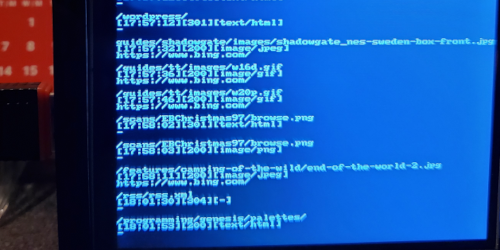
The recently unfollowed site fell for this lucrative bargain. This article appeared in their RSS feed. From the title, I already knew it was an ad. I clicked anyway out of morbid curiosity:

A topic that certainly isn't real and obvious AI artwork. The article itself reads like it was AI-generated and takes a few paragraphs to reach the links:

Yes, I redacted all the names because I'm not giving them any free press. This is all so poorly written. "The audio-visual loop that made Contra readable at a glance" - what is that even supposed to mean? I don't recall Contra requiring much reading or having any looping stages. This is total slop. The "article" was not labeled a sponsored post or ad, likely per the conditions of payment.
You have my oath that I will never post anything like this here. I would rather delete this entire site than include garbage like this.
I don't really care if sites run obvious ads. If ads and content are clearly separate things, that's fine. Deceptive articles like this mean I can't tell what is real and what isn't on your site anymore. Instead of being a site with informative or entertaining content, it's now a site with bad AI-generated ads for unregulated online casinos disguised as content. There's no going back from that. That's what your site is now. You might as well just make the whole site an online casino.
I understand the desire to make money. Running a website is expensive. Just a couple of days ago, Amazon threatened to bill me $184,289,815,603.03 for this site.
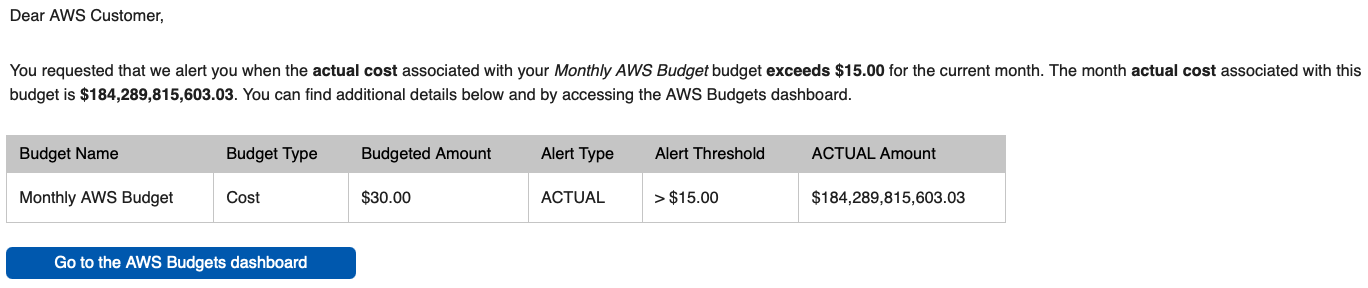
I'll admit to being freaked out by this alert. The last time I had an article go viral, it didn't increase my AWS bill by even $5. According to Reddit's S-1 filing, they spend between $94m and $137m annually on web hosting. I could rule out a viral article. It seemed unlikely I posted something that generated >100x the traffic that Reddit serves in an entire year.
When I opened the AWS billing center, I saw that about $13b was for EC2, a service I don't use. The other $170b or so was for S3, meaning storage for those unfamiliar. That's really what this site is, storage with a little bandwidth. So I next assumed I was hacked and someone uploaded $170b of files. After nearly having a panic attack over this, I realized it was a preposterous theory.
AWS S3 pricing is tiered for the first 500 GB and then $0.021 for each GB after that. Since we're dealing with an astronomical number, the first 500 GB tiered pricing difference is a rounding error. We'll therefore assume a flat $0.021 per GB. So $170b, at $0.021 per GB, brings us to roughly 8 zettabytes of data. According to a recent article on the AWS News Blog, AWS today stores "hundreds of exabytes of data."
"Hundreds" could be 200 or it could be 900. Either way, it means 0.2 to 0.9 zettabytes. So my bill was for somewhere between 8 and 40 times what AWS S3 currently stores. This made a hack seem unlikely. The logistics of uploading that volume of data in a short period of time struck me as impossible. I feel like I would have received an alert before the first billion.
Amazon would later admit their mistake. They chalked it up to some code that made an error in unit conversions. That tracks. In the articles I read, the example bills had the same scale of error I saw. This is the kind of mistake that is incredibly easy to catch in multiple layers of testing. This is not an accusation but it feels like a "vibe coding" problem (along with some "vibe testing" or perhaps none at all).
These two unrelated things could both be blamed on AI. I just implied that for the second one. The reality is both of these are problems that existed before AI. I've been dealing with constant attempts to add online casino ads to this site for at least 20 years. AI enables these scammy jerks to more quickly write sponsored posts, but the quality is so terrible they are not close to convincing. I don't actually know how or if Amazon uses AI to update their bill calculation system. I do actually know that companies made catastrophic code changes and failed to test them since the dawn of software. AI isn't making things worse here. One could argue AI is helping to make things worse faster.
Neither of these issues is serious at all. Losing a site I enjoyed a little and nearly experiencing a panic attack are problems others would love to have.
Also recently, Sony announced they would phase out physical games soon. I should feel outraged by this and would have in the past. Now, I just don't care. I already noted why I didn't care about Grand Theft Auto VI being a digital-only game. Most of that logic applies here. Even physical games require massive downloads to actually play, so what's the point of the disc? My Steam library has games I purchased nearly 20 years ago that I can still play just fine. If Sony follows that model, and I'm giving them a lot of unearned credit, then I'm not worried.
Owning physical games doesn't guarantee you can play them. The laser on my GameCube died. My physical collection is playable on the Wii, and I've also had one of those with a dead laser. Luckily I still find Wiis cheap sometimes. My TurboDuo badly needs a re-cap. If not for the Analogue Duo, that library would be unplayable too. The batteries on my PlayStation Portable and 3DS are old enough that I have to play them connected to power. Don't get me started on how many dead NES consoles I own now.
Let's all be real here. Physical games aren't perfect because they require old working hardware. If all games made after 2026 are digital-only, it's not all that different than how they work in 2026.
That's all I care to say about the state of things in July 2026. I don't know if I will post more things like this in the future, and thanks for bearing with me this one time.
Not even 12 hours after posting this:
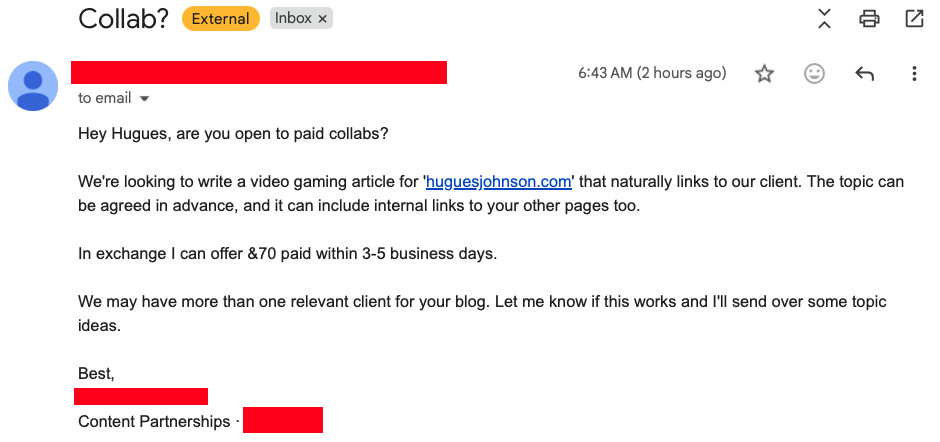
It truly will never end. I'll keep fighting the good fight though.